
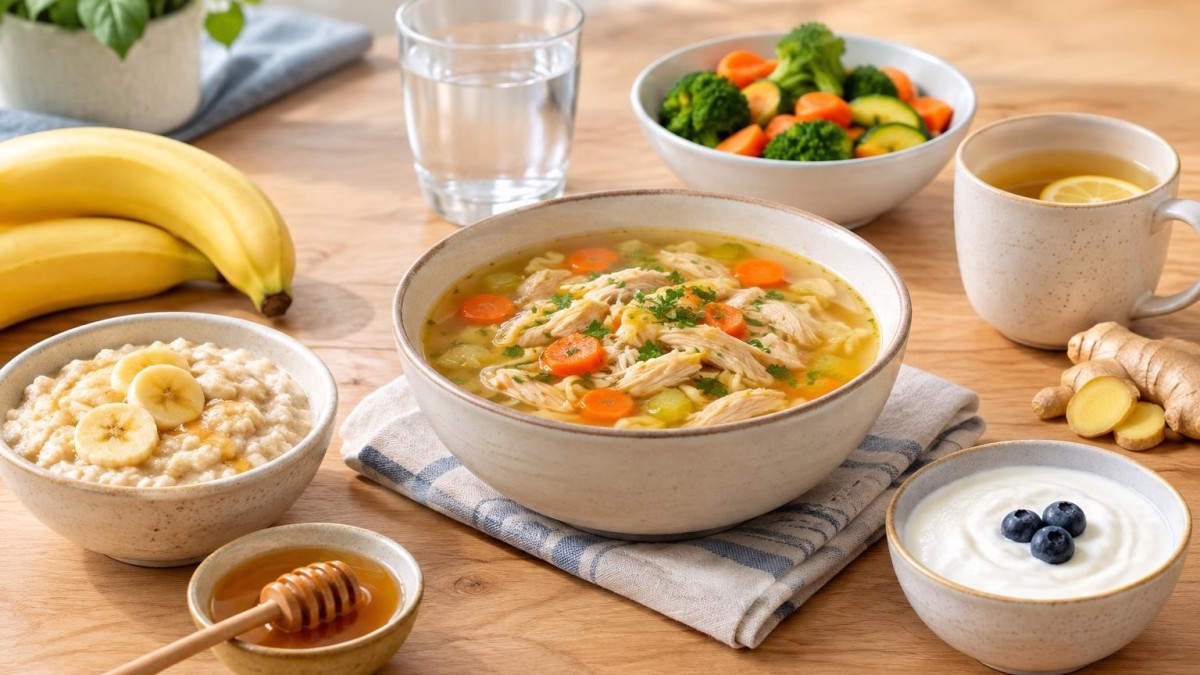
Comforting and Nourishing Foods to Ease Illness
When sickness strikes, your appetite may fade, but nourishing your body is crucial for recovery. Choosing foods that are gentle on your digestive system and rich in nutrients can help you feel better while your body fights off the illness.
Here are some soothing options to consider the next time you're under the weather.
Chicken Soup: A Time-Honored Remedy
Chicken soup is more than just comfort—it provides warmth and hydration through its broth, alongside protein from the chicken that aids tissue repair. Added vegetables like carrots and celery supply vitamins and minerals to support your immune system. The gentle steam can relieve nasal congestion and the warm broth may soothe a sore throat.
You can enjoy homemade chicken soup to control ingredients or opt for low-sodium store-bought versions for convenience. Adding rice or noodles can boost energy, especially when your appetite is low.
Ginger: A Remedy for Nausea
Ginger has long been used to ease digestive discomfort, particularly nausea. Sip ginger tea made by steeping fresh slices in hot water, or add ginger to your broth or meals to help settle your stomach. However, ginger is not a cure for respiratory infections and can irritate the stomach if consumed in large amounts.
Oatmeal and Bananas: Gentle Energy Sources
Oatmeal offers comforting warmth as well as carbohydrates, fiber, and B vitamins, all important during illness. Its soft texture makes it easy to swallow, especially with a sore throat. Enhance its flavor and nutrition by adding mashed banana, applesauce, or a drizzle of honey.
Bananas themselves are easy on the stomach, providing energy and potassium, vital for muscle and nerve function. They’re helpful during nausea or recovery from stomach issues but remember to start with small portions.
Yogurt: Protein Plus Probiotics
Plain yogurt is a smooth source of protein and calcium, beneficial when you’re eating less than usual. Some yogurts contain live cultures that might aid digestion, though they aren’t a guaranteed remedy. Choose plain or Greek yogurt with minimal added sugar, and consider lactose-free options if dairy worsens symptoms.
Honey: Soothing a Cough or Sore Throat
Honey can reduce coughing and soothe irritated throats due to its thick, coating texture. Stir a teaspoon into warm (not hot) tea or water, perhaps with lemon for flavor, unless your throat is sensitive to acidity. Avoid honey for children under one year and monitor sugar intake if you have diabetes.
Steamed Vegetables: Easy Nutrition
Lightly cooked vegetables like carrots, zucchini, spinach, or green beans offer essential vitamins and minerals without being too heavy on your stomach. Steaming softens their texture, making them easier to eat, and they can be added to soups or pureed for easier digestion.
Hydration: The Cornerstone of Recovery
Fluids are just as important as food when you’re sick. Fever, sweating, or digestive issues increase fluid loss, so drinking water, herbal teas, or broths regularly helps prevent dehydration. If swallowing is tough, try ice chips or frozen fruit pops. Significant fluid loss may require oral rehydration solutions.
Listen to Your Body
Don’t force large meals; smaller, more frequent servings often feel better. Choose foods based on what your body tolerates — warm, soft dishes for sore throats or bland foods for stomach upset. Gradually reintroduce a balanced diet of proteins, fruits, and vegetables as you recover.
Finally, remember that while food supports healing, it doesn’t replace professional medical care when needed. If symptoms worsen, or you experience trouble breathing, chest pain, dehydration, or persistent high fever, seek medical attention promptly.
Keeping staples like broth, oatmeal, frozen veggies, bananas, and herbal teas on hand can make managing sick days easier and keep nourishing options close by.
Newsletter Station provides professionally written, ready-to-send newsletters customized for your market and brand.
EXPLORE NEWSLETTER OPTIONS