
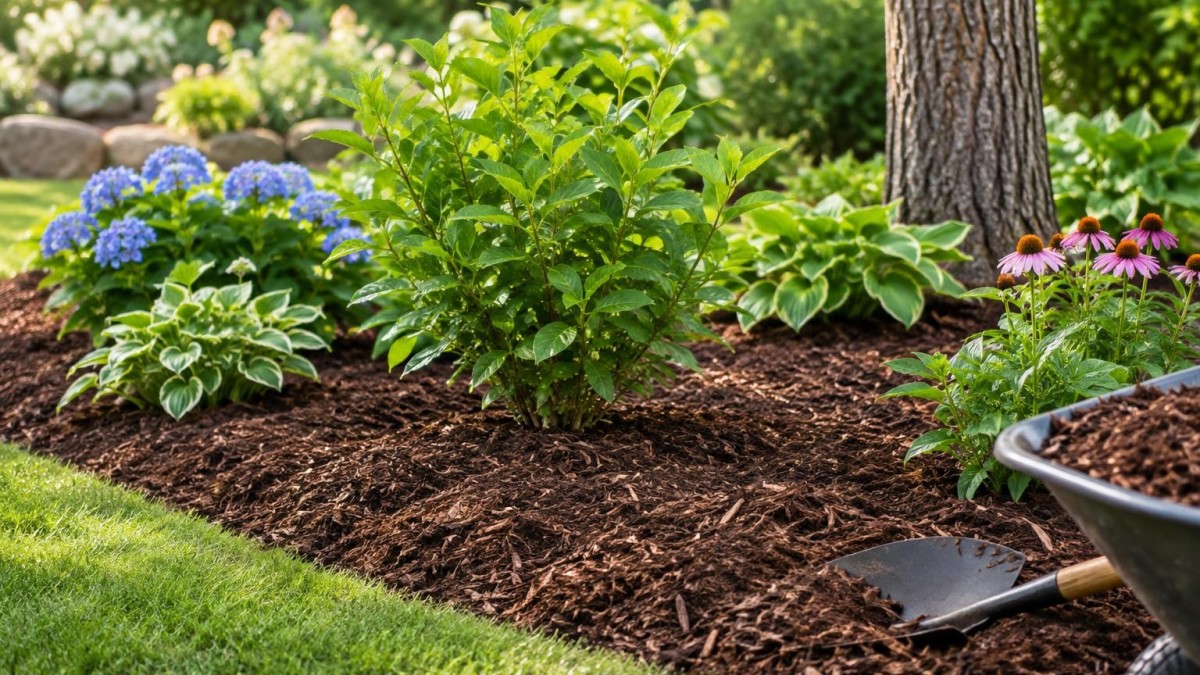
Why Mulch Matters
Mulching is a straightforward way to boost the health and beauty of your garden. A good mulch layer helps keep soil moist, cuts down on weeds, and stabilizes temperature swings in the soil. Organic mulches additionally break down over time, enriching your garden soil.
Selecting the Best Mulch for Your Garden
Choosing the right mulch depends on your plants’ needs. Organic options like shredded bark, wood chips, pine needles, straw, and shredded leaves improve soil quality as they decompose. Bark and wood chips are great near trees and perennials, while straw suits vegetable gardens well. Inorganic mulches such as gravel last longer but won’t nourish your soil, and rubber mulch isn’t recommended for veggie beds.
Preparation and Proper Application
Before mulching, clear out weeds and loosen compacted soil carefully without disturbing plant roots. Adding compost before spreading mulch can boost soil health. Watering dry soil before applying mulch helps ensure moisture reaches roots.
Apply a mulch layer about 2 to 3 inches thick for most garden beds. Coarser mulch can be a bit deeper, but avoid piling mulch too thickly as it can trap moisture and suffocate plants. When adding fresh mulch, first loosen existing layers instead of constantly adding more.
Keep mulch a few inches away from tree trunks and plant stems to prevent moisture buildup that can cause rot or pests. Creating a small gap around plants also improves air circulation.
Maintenance and Seasonal Tips
Organic mulch breaks down over time, so refreshing it in spring or fall helps protect soil and plants. Remove old mulch only if it’s heavily compacted or moldy—typically, just loosen it and top up to the right depth.
Mulched gardens usually need less watering since mulch reduces evaporation. Check soil moisture below the mulch before watering deeply to encourage strong root growth. During droughts, however, even mulched areas will need extra attention.
Appearance and Special Considerations
Mulch can enhance your garden’s look—dark bark highlights greenery, while pine needles suit woodland styles. Always prioritize plant needs over color for best results. On slopes, use heavier, coarse mulch like wood chips to prevent erosion, and consider combining with groundcovers for stability.
By choosing the right mulch, applying it thoughtfully, and maintaining it regularly, you can save time on watering and weeding while promoting vigorous plants. As seasons change, a quick garden check can keep your landscape healthy and inviting.
Newsletter Station provides professionally written, ready-to-send newsletters customized for your market and brand.
EXPLORE NEWSLETTER OPTIONS