
Identifying Common Household Beetles
Spotting a beetle indoors doesn’t always spell trouble. Some beetles wander inside by accident without causing damage. But others can infest food, fabrics, or wood, making identification essential for proper control.
Beetles You Might Encounter
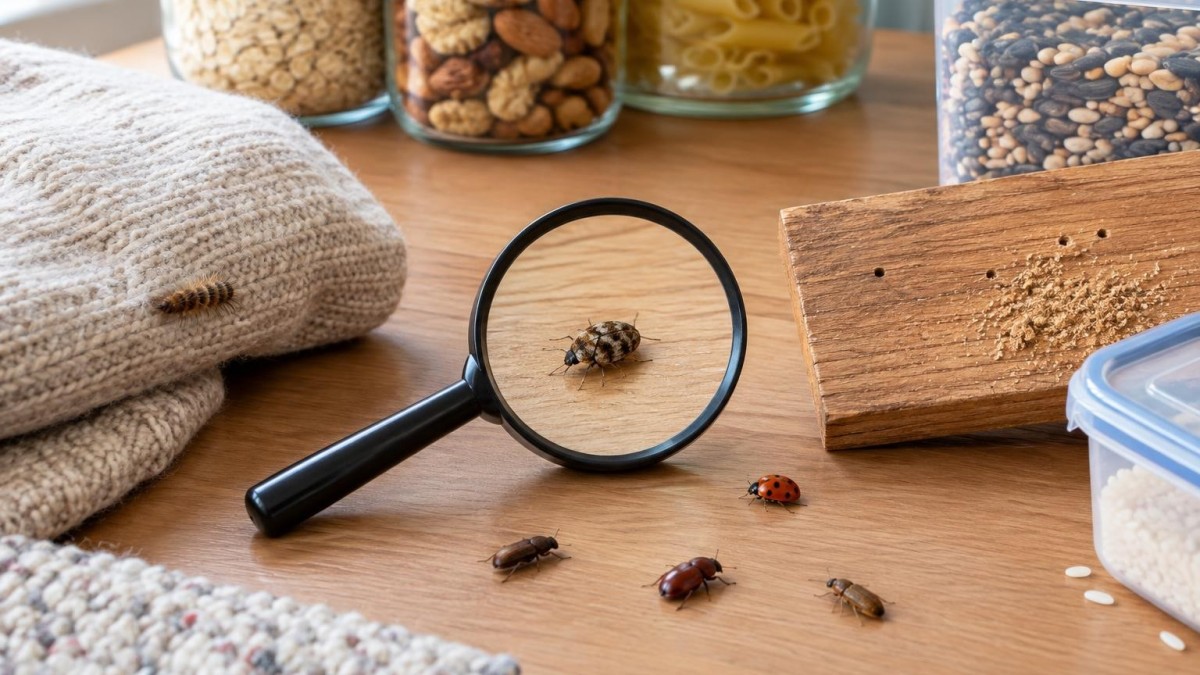
Carpet Beetles: Adults are often seen near windows and may look mottled or dark-colored, but the larvae are the real culprits, feeding on wool, fur, feathers, and other animal-based materials. These larvae can damage carpets, clothing, upholstery, and stored fabrics, thriving on hair, lint, and dead insects in hidden spots.
Regular vacuuming around baseboards, furniture, vents, and closets helps remove larvae and shed skins. Inspect natural-fiber items closely and address infestations by locating the source instead of only focusing on adults.
Powderpost Beetles: These small brown beetles bore into hardwoods like flooring, furniture, and paneling. Look for tiny round exit holes and fine powdery sawdust, evidence of larvae tunneling inside the wood.
Not all holes mean active infestation—old exit marks can be harmless. Fresh powder is a better sign of activity. Managing moisture, replacing damaged wood, or seeking professional pest control may be necessary, especially for structural wood.
Multicolored Asian Lady Beetles: Varying in color from yellow to red and often sporting a distinctive "M"-shaped mark behind the head, these beetles enter homes in fall to overwinter. They don't infest food or fabrics but can become a nuisance by gathering in wall voids.
Prevent entry by sealing cracks and gaps around windows, doors, and vents. Indoors, vacuum them up instead of crushing, as they can release a staining fluid when disturbed.
Sawtoothed Grain Beetles: Tiny, flattened brown beetles found in household dry foods like cereal, nuts, dried fruit, pasta, seeds, pet food, and birdseed. Their name comes from tooth-like projections on each side, visible under magnification.
Inspect all pantry items, including opened and nearby packages. Dispose of infested food, vacuum pantry cracks, and store food in airtight containers to prevent reinfestation.
Drugstore Beetles: Small, oval brown beetles with a broad diet, infesting flour, rice, pasta, crackers, spices, dried fruit, chocolate, and pet food. Adults can fly, sometimes spotted near windows away from the infestation source.
Check all dry goods carefully, discard infested items, clean storage areas thoroughly, and secure foods in sealed containers.
Look Beyond The Kitchen
Pantry pests often thrive in open bags of pet food or birdseed kept for long periods. Store these in pest-resistant containers and inspect them regularly as beetles can spread to other areas from these sources.
Start With Identification
Treating beetles without knowing their type risks ineffective results. Carpet beetles, powderpost beetles, and pantry beetles may look similar but require different solutions. Use clues like where you find the beetle, signs of damage, and the number of beetles to identify the problem.
Preventing Beetle Issues
Good cleaning and home maintenance go a long way. Vacuum areas where organic debris gathers, seal food airtight, inspect secondhand items before bringing them home, and seal gaps around your house to keep beetles out.
Address recurring beetle activity by investigating sources and consider professional help if damage or infestations persist.
Newsletter Station provides professionally written, ready-to-send newsletters customized for your market and brand.
EXPLORE NEWSLETTER OPTIONS