
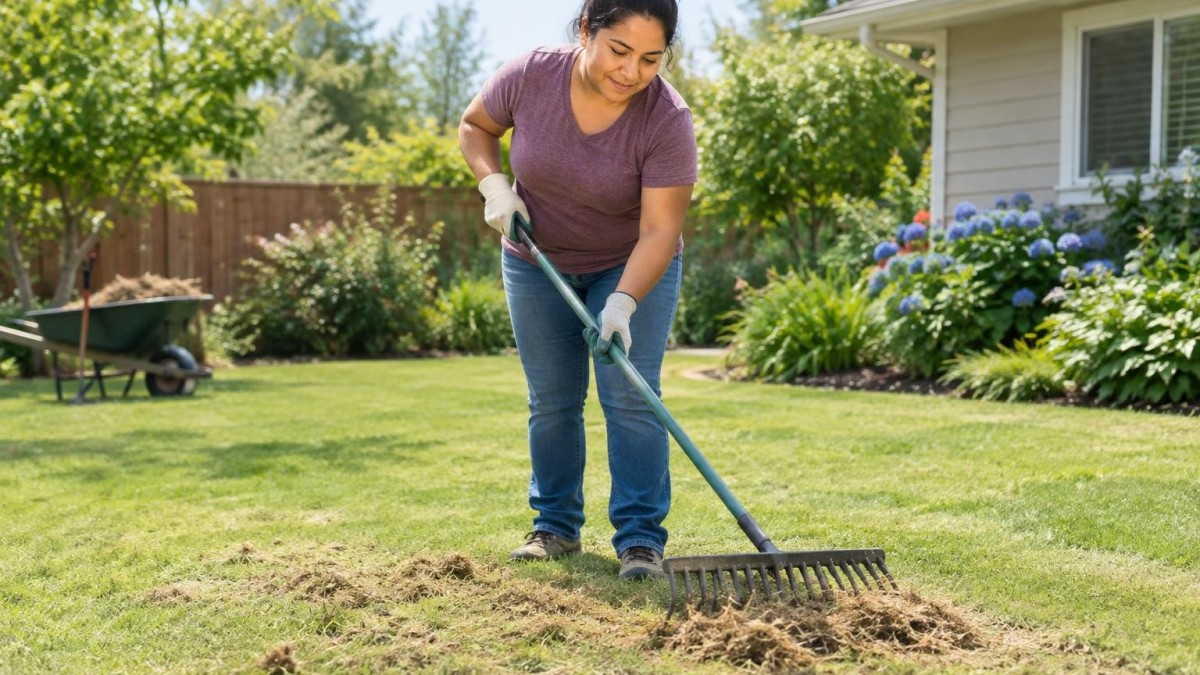
Understanding Thatch and Its Effects on Your Lawn
Thatch is a layer of partly decomposed grass stems, roots, and other organic material that builds up between the soil and grass blades. While a thin layer of thatch helps protect your lawn by regulating soil temperature and moisture, too much thatch blocks water, air, and nutrients from reaching the roots, which can lead to a thin, unhealthy lawn.
Signs Your Lawn May Need Dethatching
Before rushing into dethatching, check the thickness of the thatch layer. Use a garden trowel or knife to cut a small patch of turf about a few inches deep. If the thatch layer is more than about half an inch thick, especially if dense and spongy, dethatching could help.
Other warning signs include water pooling on the surface instead of soaking in, a spongy feel when walking on the lawn, shallow or weak grass roots, patchy growth despite good care, and poor overseeding results. However, if the soil is hard and difficult to penetrate, compaction might be the issue, which is better treated with core aeration.
When and How to Dethatch Your Lawn
The best time for dethatching depends on your grass type. Cool-season grasses usually respond well to dethatching in early fall or spring when they are actively growing. Warm-season grasses are best dethatched in late spring or early summer. Avoid dethatching during drought, extreme heat, or when the lawn is dormant because the grass won’t recover well.
Start by mowing your lawn slightly shorter than usual but avoid scalp. For small lawns or mild thatch, a dethatching rake may be enough, while larger lawns with heavy buildup might need a power dethatcher. Work methodically, covering the affected areas without overdoing it, then rake up the loosened debris thoroughly.
After dethatching, overseeding is beneficial if bare spots appear, as seed needs good soil contact to thrive. Keep new grass moist but avoid overwatering. Remember, dethatching removes thatch buildup, which is different from aeration that loosens compacted soil by removing plugs.
Regularly checking your lawn’s condition helps you decide if dethatching is necessary. This targeted approach keeps your lawn healthy and resilient without causing unnecessary stress or damage.
Newsletter Station provides professionally written, ready-to-send newsletters customized for your market and brand.
EXPLORE NEWSLETTER OPTIONS