
Why Proper Tree Trimming Matters
Trimming your trees can boost their health, enhance their shape, and improve safety around your property. But more isn’t always better—each cut removes living tissue and creates a wound the tree must heal. The key is trimming the right branches at the right time for a clear purpose.
When done well, pruning removes dead or damaged limbs, prevents hazards from unstable branches, and helps shape young trees for strong growth. Done poorly or too aggressively, it can weaken your tree and cause long-term problems.
Best Timing for Tree Pruning
Timing depends on the tree species and your pruning goals. For many deciduous trees, late winter to early spring—while the tree is still dormant—is ideal. Without leaves, it’s easier to see branch structure, and the tree can heal cuts as it enters its growing season.
Some species, like oaks, require extra caution. Pruning during the dormant season helps reduce risk of oak wilt, a serious disease spread through fresh summer wounds. Maples and birches may “bleed” sap if pruned early, which looks alarming but usually doesn't harm the tree. If the sap bothers you, waiting until after leaf growth may help.
For flowering trees that form buds on last year’s growth, it’s best to prune right after they bloom to avoid cutting off flowers.
How to Trim Trees Safely and Effectively
Start trimming with a clear purpose: remove dead, damaged, or diseased branches; eliminate branches that cross or rub; and clear limbs that interfere with structures or pathways. Avoid cutting healthy branches just to thin a canopy unless necessary.
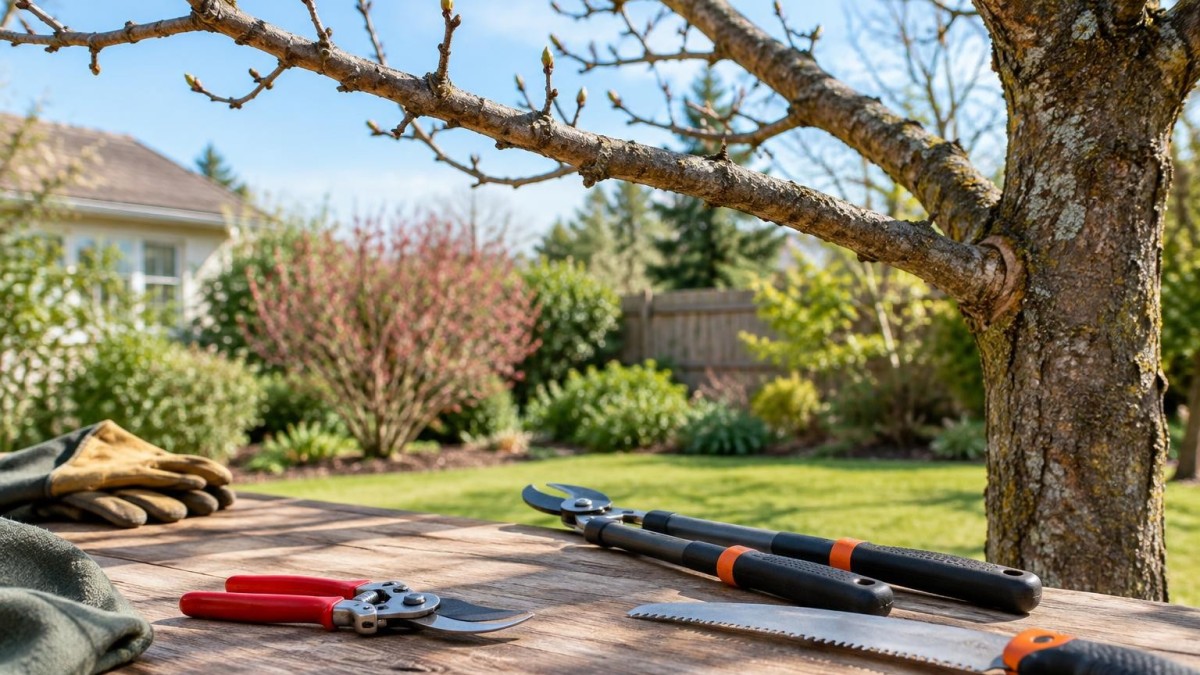
Use the right tools for the job—hand pruners for small branches, loppers for medium-sized ones, and pruning saws for larger limbs. Keep tools sharp for clean cuts. For big branches or high limbs, calling a professional is safer and often wise.
When cutting, avoid trimming flush with the trunk. Instead, cut just outside the branch collar, the swollen area where the branch joins the trunk, to let the tree seal the wound effectively and reduce decay risk.
For large branches, use a three-cut method: a small cut on the underside to prevent bark tearing, a second cut farther out to remove most of the limb, then a final cut at the branch collar.
Avoid topping, which involves cutting back large branches indiscriminately. This practice weakens trees structurally and encourages unhealthy growth.
When to Call in the Pros
If branches are large, high up, over structures, or near power lines, or if your tree has storm damage or decay, hire a certified arborist. They’ll have the right equipment and expertise to keep you and your trees safe.
Good pruning focuses on thoughtful, minimal cuts that resolve problems while preserving your tree’s health and natural form. With patience and proper technique, your trees will thrive and beautify your landscape for years to come.
Newsletter Station provides professionally written, ready-to-send newsletters customized for your market and brand.
EXPLORE NEWSLETTER OPTIONS