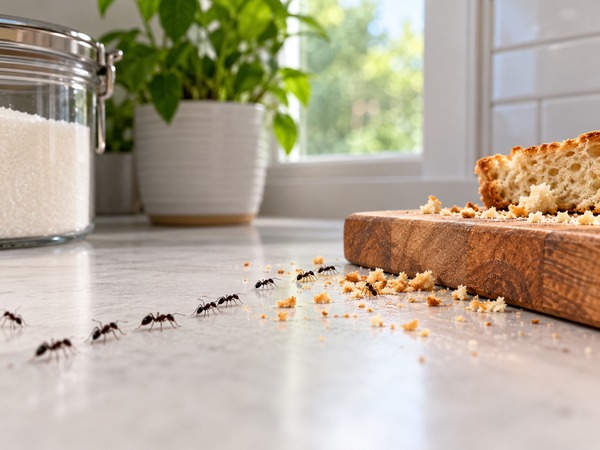
Ants are a normal part of the outdoor environment, but once they find a reliable source of food, water, or shelter inside your home, they can quickly become a persistent problem. A few ants on the kitchen counter may be scouts from an outdoor colony—or a sign that ants have already found a way to nest indoors.
The challenge is that ants don't need an obvious open door or window to get inside. Depending on the species, they may enter through tiny cracks, gaps around plumbing, foundation openings, or even branches touching the house. Some species can also establish nests inside wall voids, beneath floors, or in moisture-damaged wood.
Understanding what attracts ants and how they get indoors is the first step toward preventing an ant infestation. Here are five common trouble spots to check around your home.
- Cracks and Gaps Around the Home
Ants can take advantage of very small openings in a home's exterior. Cracks in the foundation, gaps around windows and doors, and spaces where pipes, cables, vents, or utility lines enter the house can all provide access.
Watch an active ant trail for a few minutes before wiping it away. You may be able to see exactly where the ants are entering, which makes sealing the opening much easier.
Prevention Tip: Inspect the exterior of your home periodically, paying particular attention to the foundation, window and door frames, siding, and utility penetrations. Seal accessible cracks and gaps with an appropriate caulk or sealant, and replace worn weatherstripping around doors and windows.
- Accessible Food and Crumbs
Food is one of the biggest reasons ants venture indoors, but sweets aren't the only attraction. Depending on the species and time of year, ants may feed on sugary foods, starches, fats, meats, pet food, and other household food sources.
An overlooked crumb under an appliance, residue inside a recycling container, or an open bag of pet food can be enough to keep ants coming back. Once workers locate food, many species establish chemical trails that help other members of the colony find the same source.
Prevention Tip: Store food—including pet food—in tightly closed containers. Clean counters and food-preparation areas regularly, rinse recyclable food containers, and don't overlook crumbs and spills beneath appliances, around trash cans, or inside cabinets.
- Sticky Spills and Food Residue
That small spot of syrup beside the toaster or drop of juice under the refrigerator may not seem significant, but ants can locate remarkably small food sources. Some common household ants are particularly attracted to sweets and may continue following an established trail even after the obvious food has been removed.
Simply sweeping away the visible ants doesn't address what attracted them in the first place.
Prevention Tip: Clean spills promptly with soap and water and wipe down the surrounding surface rather than only the visibly sticky area. If ants have established a trail, cleaning the surface can help temporarily disrupt it while you locate the food source or entry point.
Avoid relying on home remedies such as cinnamon, essential oils, orange peels, or similar repellents as your primary ant-control strategy. These approaches aren't considered reliable methods for eliminating an established colony.
- Branches, Shrubs, and Other Outdoor Pathways
The landscaping around your house can unintentionally provide ants with a convenient route indoors. Tree limbs and shrubs that touch siding, roofing, eaves, or other parts of the structure can function as bridges.
This is especially worth watching for with carpenter ants. Carpenter ants commonly establish parent colonies outdoors in decaying wood, including trees, roots, stumps, and logs. Workers can travel between outdoor nests and structures while searching for food or establishing satellite nests.
Contrary to a common misconception, carpenter ants don't eat wood the way termites do. They excavate wood to create galleries for nesting, and moisture-damaged or decayed wood is particularly attractive for parent nests.
Prevention Tip: Trim branches and shrubs so they don't touch the house, roof, or eaves. Keep firewood away from the building, and remove rotting wood, stumps, or other debris near the foundation when practical.
- Leaks, Dampness, and Moisture-Damaged Wood
Food isn't the only thing ants need. Water and suitable nesting conditions can also draw them into a home.
Check areas around sinks, dishwashers, tubs, showers, toilets, basements, crawl spaces, and plumbing penetrations. A slow leak that hasn't created an obvious puddle may still keep wood or other materials damp enough to make the area attractive to ants and other pests.
Moisture is particularly important when dealing with carpenter ants, which may establish nests in wood affected by leaks, condensation, or poor air circulation.
Prevention Tip: Repair leaking pipes, faucets, roofs, and gutters promptly. Improve ventilation where moisture regularly accumulates, and replace badly moisture-damaged or decayed wood rather than simply allowing it to dry.
What If Ants Are Already Inside?
If you are already seeing ants, resist the urge to simply spray every ant you find. The ants traveling across a counter or floor are usually only a portion of the colony, so killing visible workers may provide temporary relief without eliminating the source.
Identification matters, too. Different ant species have different nesting locations, food preferences, and control methods. Ant baits can be effective for many indoor ant problems because workers carry the bait back to the colony, but results aren't instantaneous and the appropriate approach depends on the species. Spraying insecticide around bait can also interfere with ants carrying that bait back to the nest.
Persistent carpenter ant activity deserves additional attention. Repeated sightings of large numbers of carpenter ants, coarse sawdust-like material near wood, or numerous winged ants emerging indoors can indicate a nest within the structure. Carpenter ant nests can be difficult to locate and may require professional pest management.
A Few Preventive Habits Can Make a Big Difference
Keeping ants out of your home usually involves more than addressing one crack or wiping down one countertop. Look at the house from an ant's perspective: Where can they enter? What can they eat? Where can they find water? Are branches, firewood, mulch, or damaged wood creating favorable conditions close to the structure?
Sealing accessible entry points, keeping food properly stored, cleaning spills and crumbs, trimming vegetation away from the house, and correcting moisture problems can make your home considerably less inviting.
And if ants keep returning despite those steps, identifying the species and locating the nest is usually more productive than repeatedly treating the ants you happen to see.