How Thomas Edison Made Electric Light Practical
| Inventor | Thomas Edison |
|---|---|
| Place of Development | Menlo Park, New Jersey, USA |
| First Patent | December 1879 |
| Original Purpose | Provide safe, reliable indoor lighting |
| Key Innovation | Durable carbon filament and practical vacuum inside the bulb |
Before electric light bulbs brightened our homes, people relied on candles, oil lamps, or gas lighting—each with its own health hazards, fire risks, and limited brightness. Thomas Edison’s quest to banish these flickering, smoky sources met with substantial hurdles, both technical and societal.
Overcoming Technical Obstacles
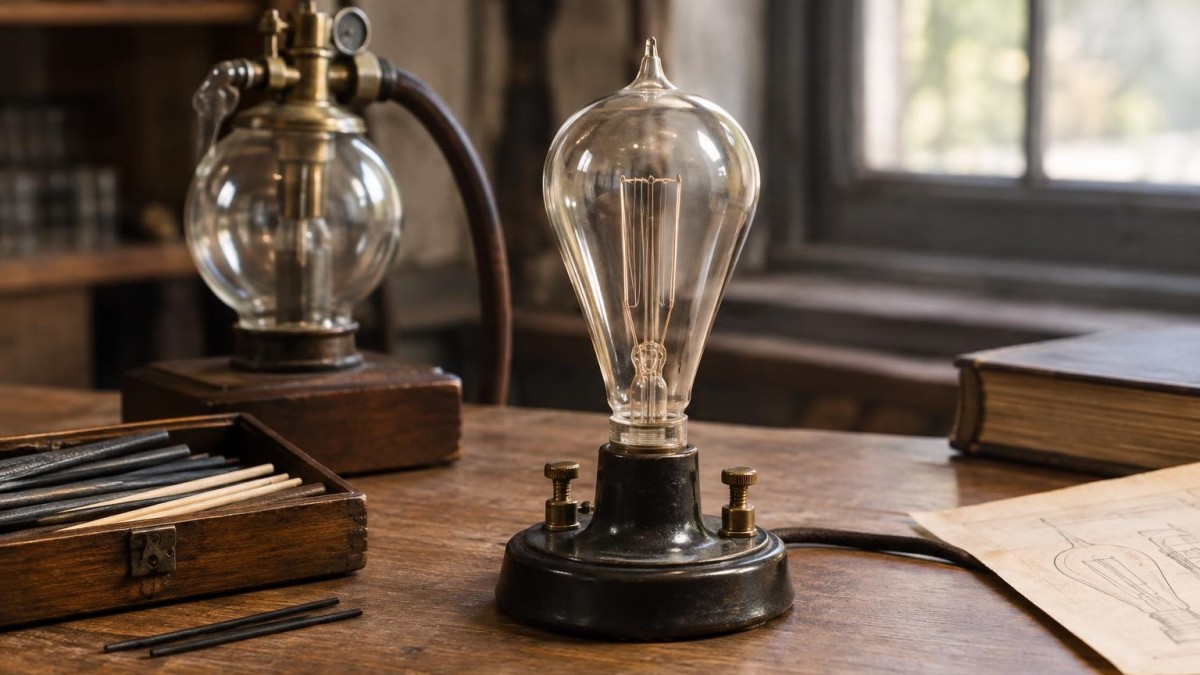
Edison’s challenge was not inventing light from electricity—that idea existed—but making a bulb that was practical, long-lasting, and cost-effective. Earlier attempts fizzled quickly because filaments burned up or vapors inside bulbs caused early failure. Edison’s breakthrough came by testing thousands of materials before settling on carbonized bamboo filament, which could glow reliably for over 1,200 hours.
He also developed a strong vacuum inside the glass bulb, crucial for protecting the filament and extending the bulb’s life. This combination of a high-quality vacuum and durable carbon filament made widespread use feasible.
Winning Public Trust and Infrastructure Support
The switch from gas or oil to electric light wasn’t just about the bulb—it required creating an electrical distribution system in cities. Edison’s vision included power stations and wiring to bring electricity safely indoors. At first, many were skeptical about the safety, reliability, and expense of this new technology.
Edison arranged public demonstrations where audiences could see electric light’s advantages—steady, bright light without smoke or odor. He also worked to improve and promote the entire system, not just the bulb, paving the way for electric lighting’s rapid adoption in homes, factories, theaters, and streets.
In the end, Edison’s perseverance in solving scientific puzzles and persuading a wary public transformed the way we light our world. The electric light bulb not only extended productive hours but also reshaped daily life in countless ways.