- By the dedicated team of editors and writers at Newsletter Station.
Few household pests are as frustrating as a swarm of tiny flying insects appearing around your kitchen, sink, or houseplants. Because adult gnats are small and reproduce quickly, killing the ones you see often isn't enough. The key to getting rid of gnats is identifying where they come from and eliminating the conditions that let them reproduce.
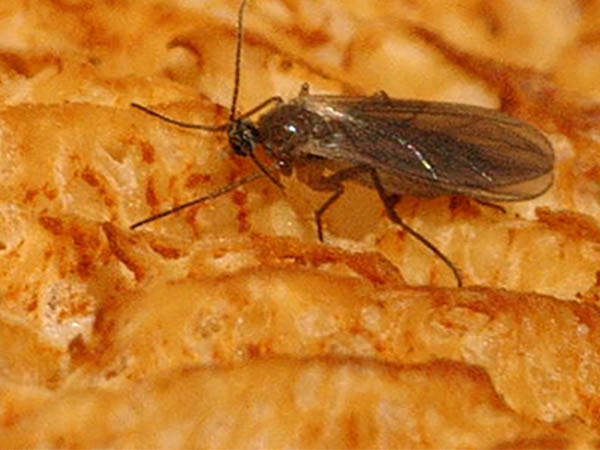
The term "gnat" can refer to several different small flying insects. Two common indoor problems are fruit flies and fungus gnats, and they require different approaches. Drain flies are another possibility and are often mistaken for gnats.
Identify the Insect First
Look at where you're seeing the insects.
Fruit flies are usually found around kitchens, fruit bowls, recycling containers, trash cans, and other areas containing fermenting or decaying organic material. They're small and often tan or brown.
Fungus gnats are typically associated with houseplants. Adults fly around plants, while their larvae live in damp potting soil and feed primarily on fungi and decaying organic matter.
Drain flies are small, fuzzy-looking flies commonly found near sinks, showers, and floor drains. They can develop in the organic film that accumulates inside drains.
Identifying the source matters because a vinegar trap may catch adult fruit flies but won't solve a fungus gnat problem that keeps developing in damp plant soil.
Remove Food and Breeding Sources
If fruit flies are the problem, start in the kitchen.
Check produce carefully and discard anything that is overripe or beginning to decay. Don't forget potatoes, onions, bananas, and other produce stored outside the refrigerator. Wipe up spills involving juice, soda, wine, or other sweet liquids.
Empty trash and recycling regularly, and clean containers that may have food residue. Keep produce covered or refrigerated when appropriate, and store other foods in sealed containers.
If the insects are concentrated around a sink, inspect the drain and garbage disposal for buildup. Simply pouring a household cleaner down the drain may not remove the organic film where flies can breed. Regularly cleaning the drain and disposal according to the manufacturer's recommendations is a better long-term approach.
Check Your Houseplants
A sudden increase in tiny flies around your plants is a good reason to inspect the soil.
Fungus gnats prefer consistently moist conditions, so avoid keeping potting soil continually wet. Let the soil surface dry between waterings, depending on the plant. Don't follow a fixed watering schedule if the plant's soil is still damp.
Yellow sticky traps placed near affected plants can catch adult fungus gnats and help you see whether the population is decreasing.
If the infestation persists, remove heavily infested plant material and consider replacing contaminated potting soil. Be careful when repotting so you don't spread contaminated soil to other plants.
Not every houseplant can tolerate drying out between waterings, so adjust watering based on the plant rather than applying the same rule to every pot.
Use Traps for Adult Fruit Flies
Traps can reduce the number of adult fruit flies you see, but they work best when combined with source removal.
You can make a simple fruit-fly trap with apple cider vinegar and a small amount of dish soap. The vinegar attracts the flies, while the soap changes the liquid's surface tension so flies that land in it are less likely to escape.
Place traps near the area where fruit flies are most active. Replace the solution regularly and continue looking for the breeding source. A trap that catches dozens of flies can be useful, but it won't eliminate an infestation if decaying food or another breeding site remains nearby.
Don't Overlook Moisture and Hidden Organic Matter
When an infestation doesn't disappear, look beyond the obvious sources. Gnats and small flies can take advantage of easy-to-miss places, including damp soil, wet mop heads, dirty recycling containers, garbage disposals, and organic buildup around drains.
For drain-associated flies, cleaning the accessible parts of the drain and removing buildup is generally more useful than repeatedly killing the adult flies. If you're unsure where the insects are breeding, observe where the largest concentration of adults appears rather than treating every area of the house.
Be Cautious With Pesticides
Sprays and other commercial pest-control products may help when sanitation and moisture control aren't enough, but they shouldn't be the first step if the breeding source is still present.
Always read and follow the product label, particularly when using pesticides indoors. Keep children and pets away from treated areas as directed, and never use a product in a manner inconsistent with its label.
Using more pesticide than recommended won't necessarily solve the problem. If insects continue emerging from a hidden breeding site, eliminating that source is usually more important than repeatedly treating the adults you can see.
Prevent Gnats From Coming Back
Once the infestation is under control, a few simple habits can make another outbreak less likely:
Store susceptible produce properly and discard spoiled food promptly.
Clean spills and food residue quickly.
Empty trash and recycling regularly.
Keep kitchen and bathroom drains clean.
Avoid overwatering houseplants.
Don't allow water to sit in plant saucers for extended periods.
Repair plumbing leaks and address unnecessary moisture.
Keep window and door screens in good condition.
If you continue seeing large numbers of flying insects despite addressing likely food, drain, and plant sources, the problem may not be the type of "gnat" you initially suspected.
Getting rid of gnats is usually less about finding a single miracle treatment and more about breaking their breeding cycle. Identify where the insects are developing, remove the food or moisture source, use traps to reduce the adult population, and monitor the area for signs of continued activity. If the infestation persists or you can't identify the source, a pest professional can help determine what you're dealing with and where it is coming from.